10 Elements Every Business Proposal Should Have
A compelling business proposal can help you close the gap between you and your prospects, demonstrating that you understand their needs and can help to address their business challenges. Are you missing these 10 essential elements?

Business proposals are vital to winning new clients and meeting your revenue goals. They help close the gap between you and your prospects, demonstrating that you understand their needs and can help to address their business challenges.
Whether you’re an entrepreneur just starting out, a veteran business owner with years of experience, or a sales executive looking to smash your targets, a compelling business proposal is one of the most powerful tools you can have in your sales arsenal. However, knowing that you need a business proposal is just the first step. The next key step is creating a proposal that will grab the attention of your prospective clients and get them eager to work with you. But before this, let’s define exactly what a business proposal is.

What is a business proposal?
A business proposal is defined as “a formal document in writing sent by a supplier or business to a prospective client, in the hopes of winning a project or closing a deal” In other words, a business proposal is a sales pitch in print that explains why your business is the perfect solution for your prospect’s needs. A business proposal convinces a prospective client that they should work with you, and is often the last thing they see before making a decision, so it needs to be carefully constructed and convincing. If the proposal lacks any essential element or has an obvious error, you might not get the chance to make amends and ultimately miss out on a new client.
Types of business proposals
There are two types of business proposals: solicited and unsolicited.
- Unsolicited business proposals: This type of proposal is sent to potential customers without first receiving a request. Unsolicited business proposals are useful for cold prospecting and outbound marketing campaigns.
- Solicited business proposals: Solicited proposals are sent in response to prospective clients who send a Request for Proposal (RFP). This type of proposal is used in lead nurturing and lead conversion campaigns.
In many cases, unsolicited proposals are sent to prospects who know little about you or your business. The primary purpose of this type of proposal is to establish contact with a prospect and get them interested enough to work with you. The ideal result is a reply from them asking for more information. Therefore, when sending an unsolicited business proposal, it should be more educational, focus on the prospect’s assumed needs, and show how your business can meet those needs. Social proof like certifications, awards, and customer testimonials are also crucial in unsolicited proposals.
On the other hand, for solicited proposals the lead is already warm, in other words they are aware of your business and have an established line of communication with you. So, the ideal reply to this kind of proposal is a signed agreement by the prospect to work with you. Therefore, when writing a solicited proposal, you should focus on providing sufficient information on the costs of working with you and the procedures to be followed. Your proposal should also clearly communicate all the terms and conditions of the agreement. Regardless of whether a proposal is solicited or unsolicited, it needs to have some crucial elements to make it compelling and ensure your prospects respond positively.
10 Elements your business proposal must have
Before you put pen to paper (or type a single letter), you must research the company you are sending the proposal to. If you have received an RFP, make sure that you read it carefully and understand what the client wants. Remember, if your proposal has an error, you might not get a chance to correct it. Now you’re ready to start writing your business proposal! While there is no one-size-fits-all approach to writing the proposal, here are ten elements that every proposal should have, and in the order that they should appear.
1. Title Page
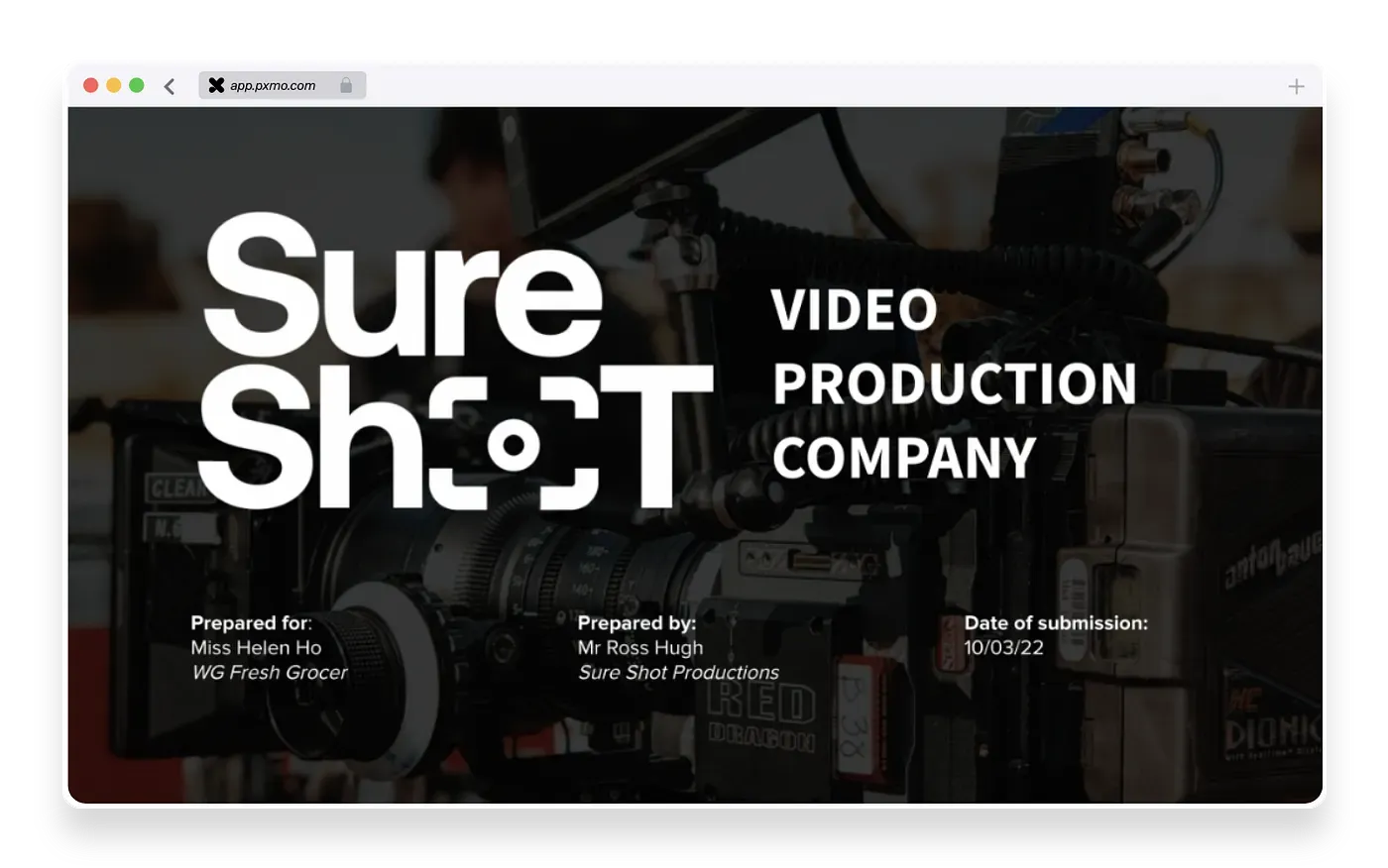
The title page is to your proposal what a homepage is to a website - the first impression. Without a good title page, the client might not continue reading your proposal. Your title page should be properly designed and tailored to fit each client. It should also convey some basic information like:
- Your business’s name
- Company logo
- Date of submission
- Client’s details, such as individual or company name.
You also want to ensure that the title page has an aesthetically-pleasing design. Use a limited colour palette that aligns with your company branding. A title page that is too busy or too bland will not entice your prospect to continue reading.
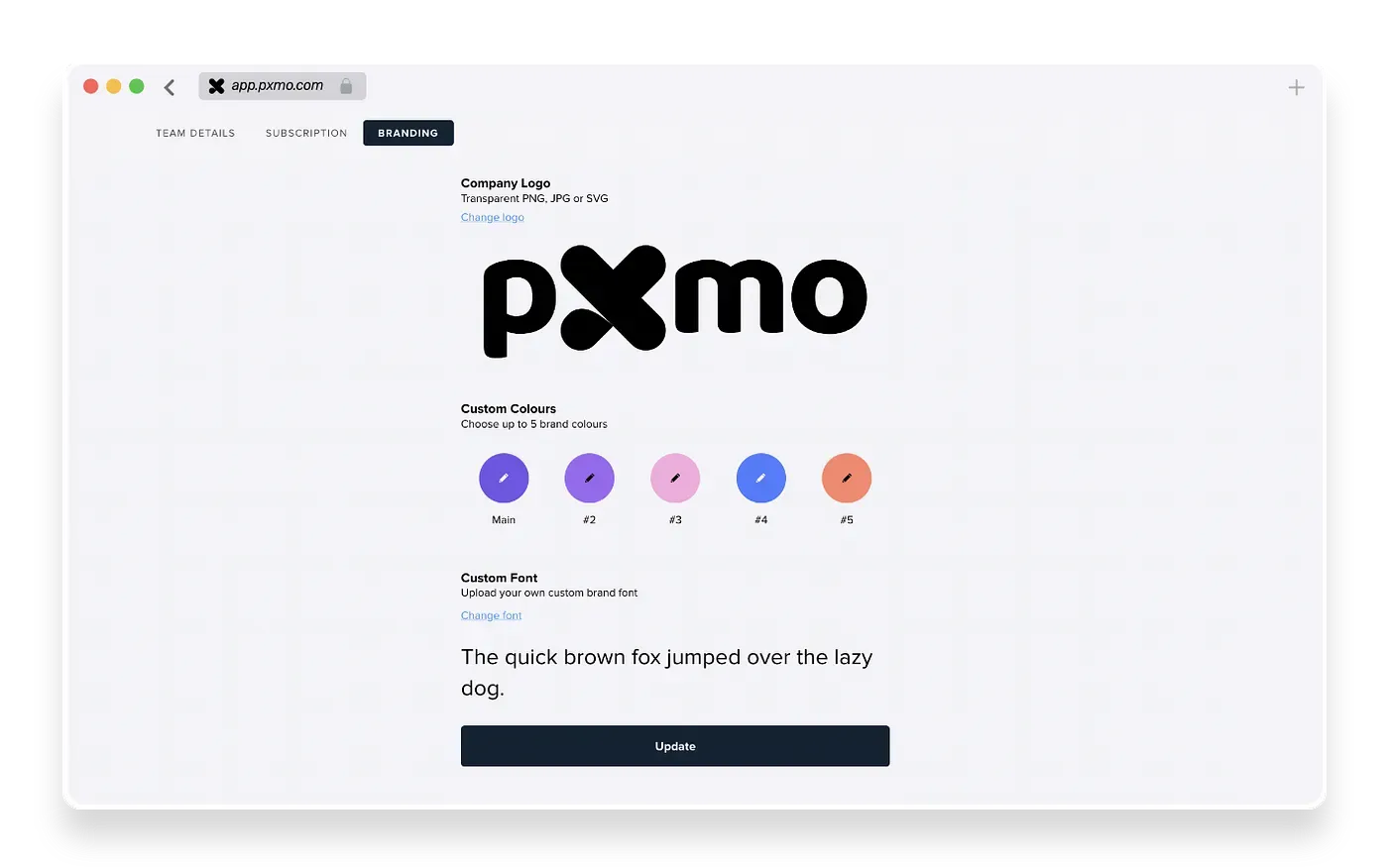
Not a designer? pxmo’s brand onboarding wizard allows you to upload your brand style (including your logo, colours, and font) and automatically apply it to every proposal.
2. Table of Contents
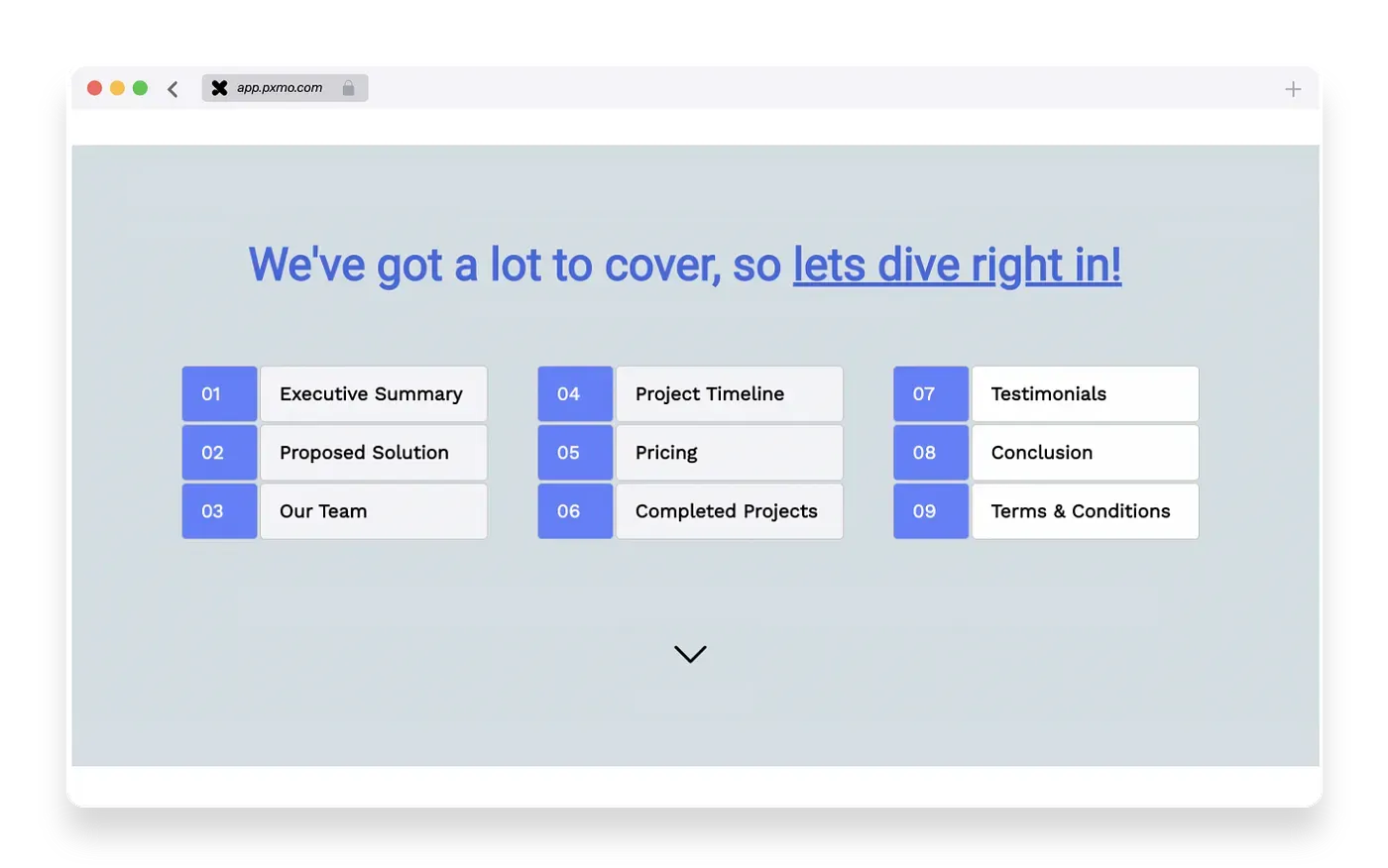
It is crucial that your business proposal is easy to navigate for prospects, which is why you need a table of contents that shows exactly what is in the proposal. This is especially important for longer proposals, as it will allow prospects to locate the information they need as quickly as possible. If you are sending an electronic proposal, you’ll get bonus points by making the table of contents clickable, limiting the need to swipe back and forth to navigate different sections of the proposal.
3. Executive Summary & Problem Statement
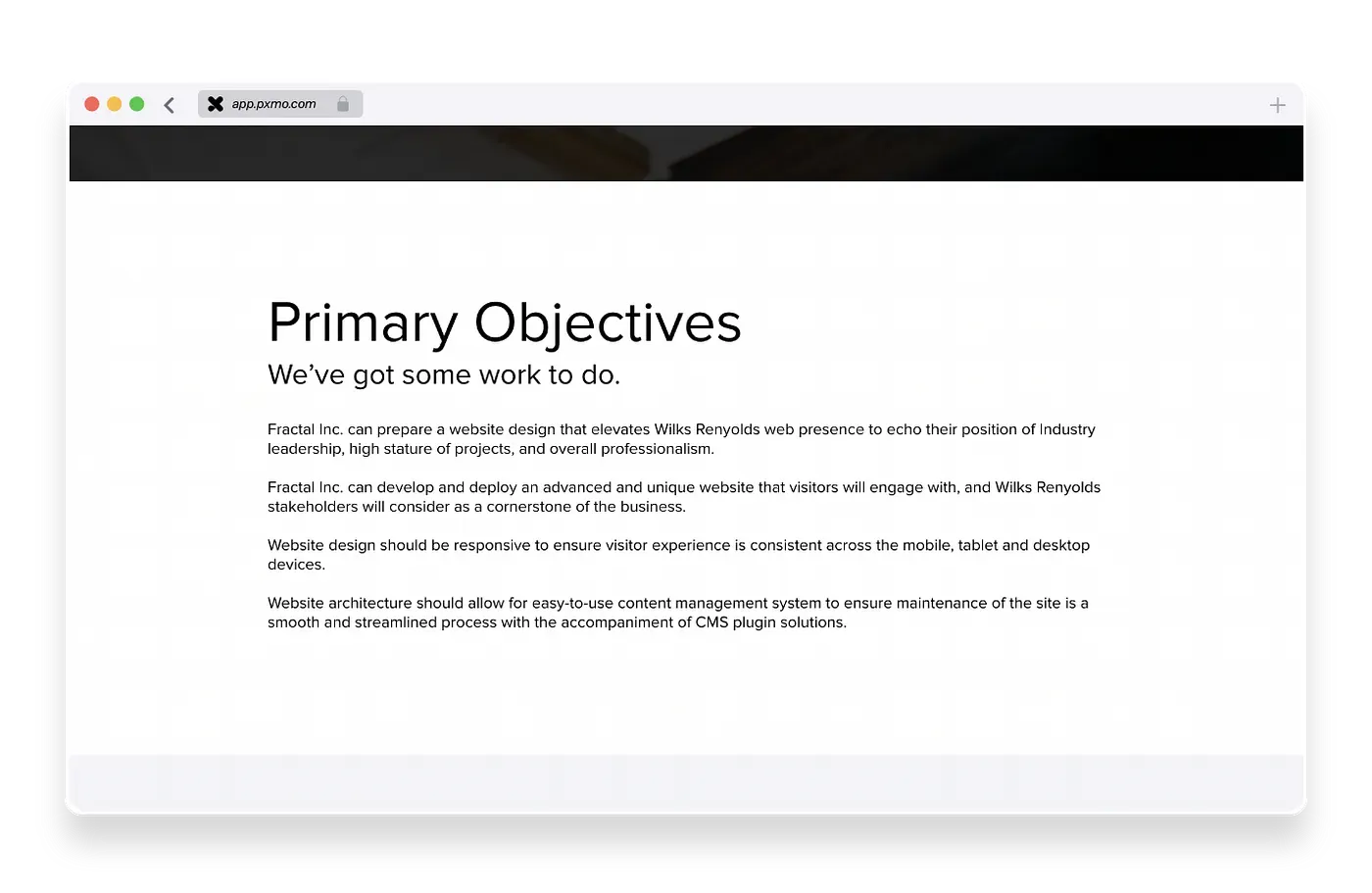
The executive summary and problem statement section explain why you are sending the proposal. It outlines the problem your prospective client is facing and summarises your intention to help them fix it. After reading this section, your prospects should have a clear idea of who you are, recognise that you understand their problems, and have a brief overview of how you can help them solve those problems. The problem statement should focus on the most important problem their business is facing.
4. Proposed Solution
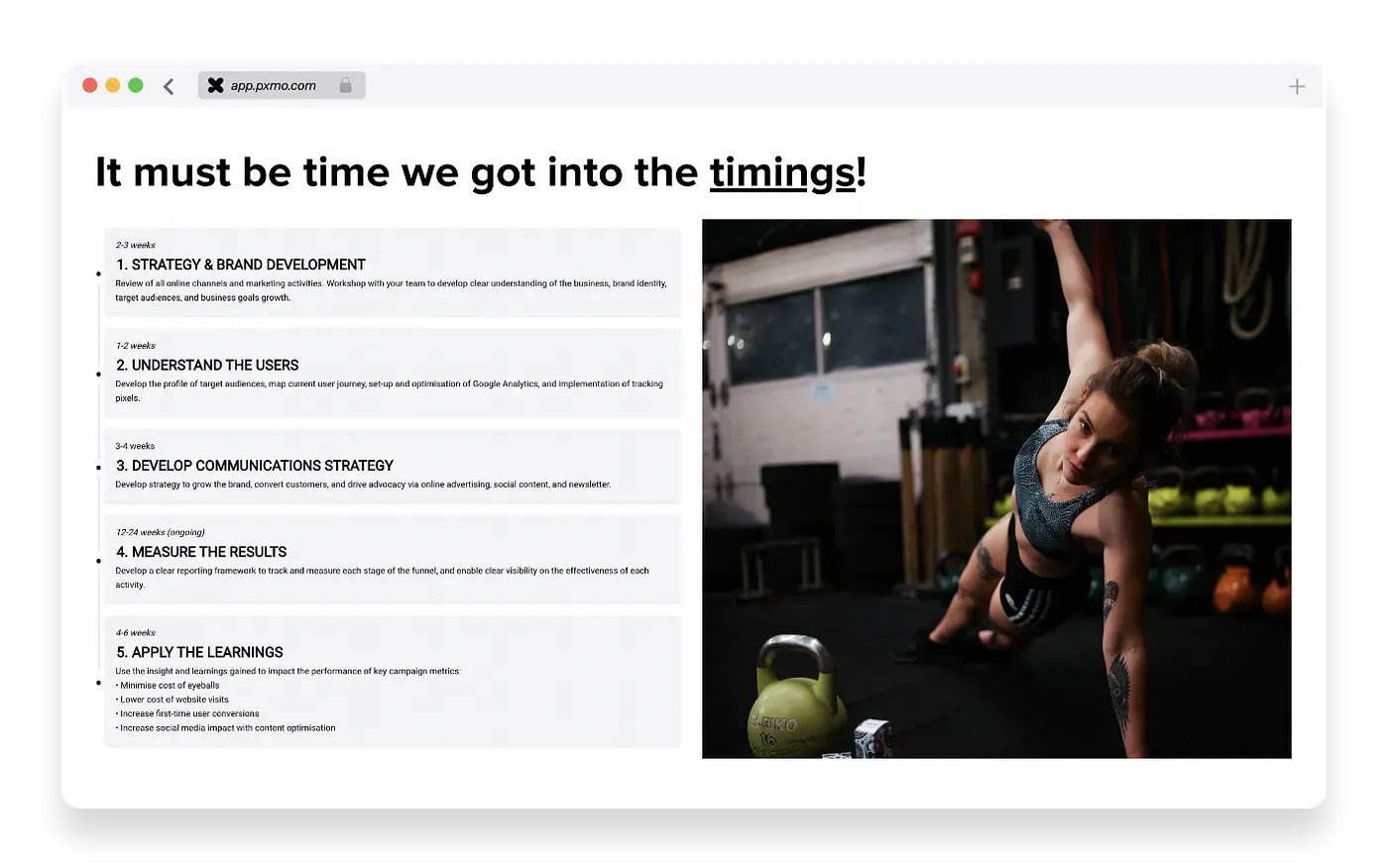
This section is where you explain to your prospects how you plan to solve their problem and deliver the desired results. It is essential that the proposed solution be detailed, as it demonstrates your expertise and can help convince the decision-maker(s) that they should work with you. pxmo has a timeline feature that allows you to display a step-by-step breakdown of the various activities that your solution will entail, as well as a time estimate. This way, your prospect can see at a glance how long it will take to deliver the objectives outlined in the proposal.
5. Company Profile
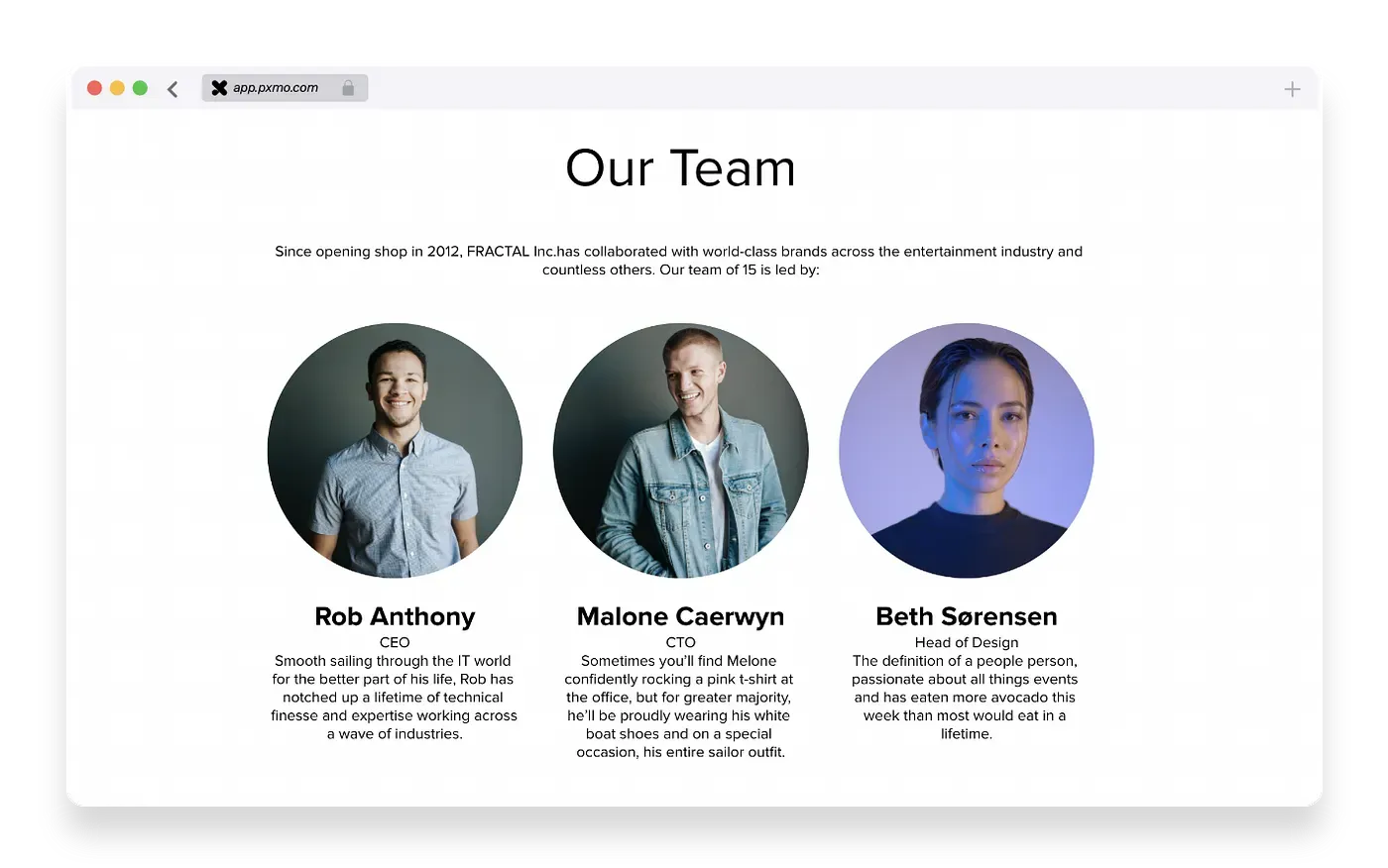
Use this section to showcase your company’s experience and qualifications to prospective clients. You should also display any relevant awards or certifications that prove your expertise and competence. In addition, your company profile should also include a team profile that shows the qualifications and expertise of the individual team members that would be working on the project. The team profile should have the name and image of each team member, along with a short bio that highlights the specific insights and expertise they bring to the project.
6. Social Proof
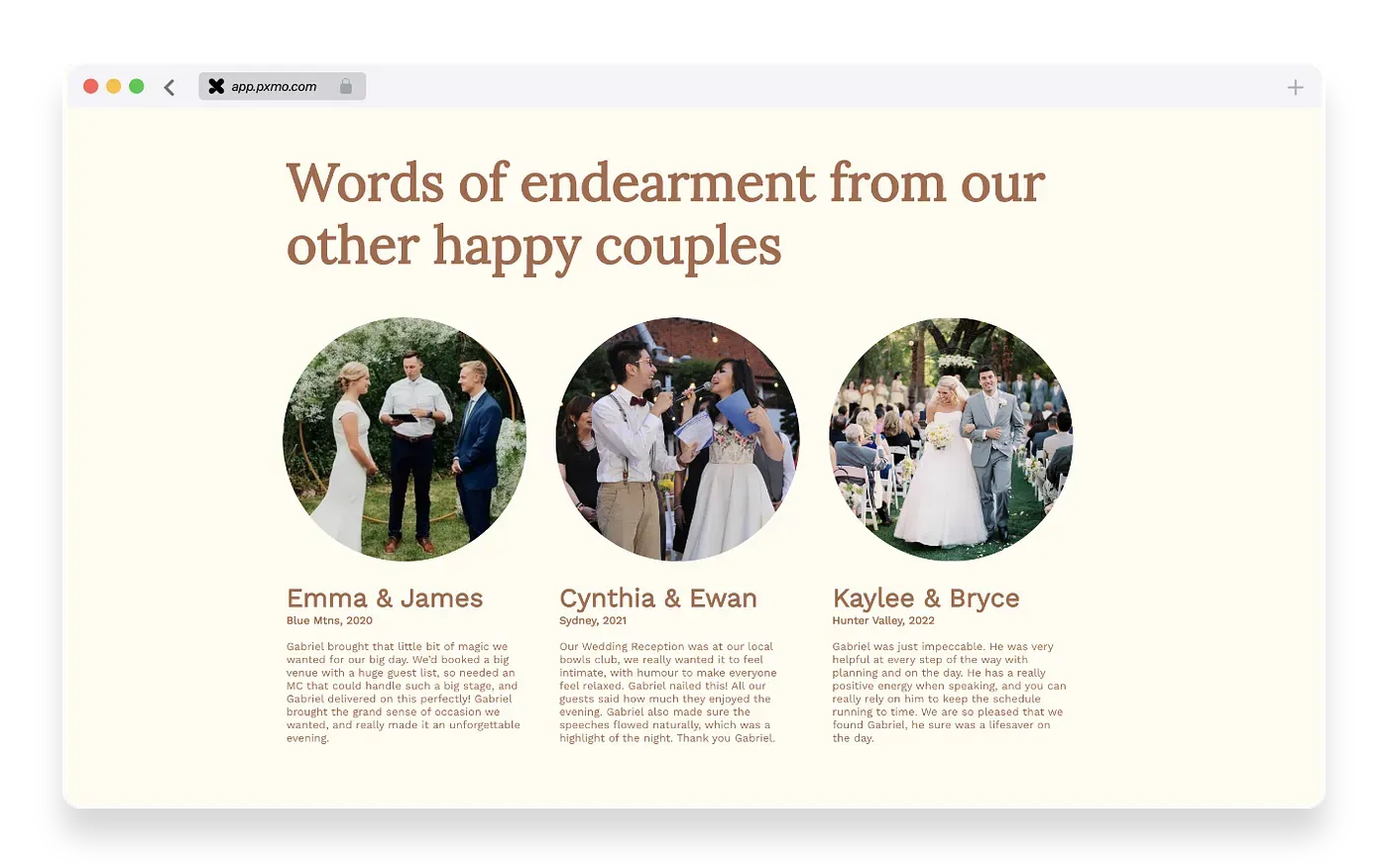
Social proof is incredibly powerful, and showing that you have delivered a similar result for a client in the past can help you create trust and close the deal. In addition, showcasing success stories from previous projects will help boost your business’s authority and perceived competence. With pxmo, you can easily display case studies in your proposal by adding images or testimonials from previous clients and a brief statement about what you did and the results you were able to achieve.
7. Pricing
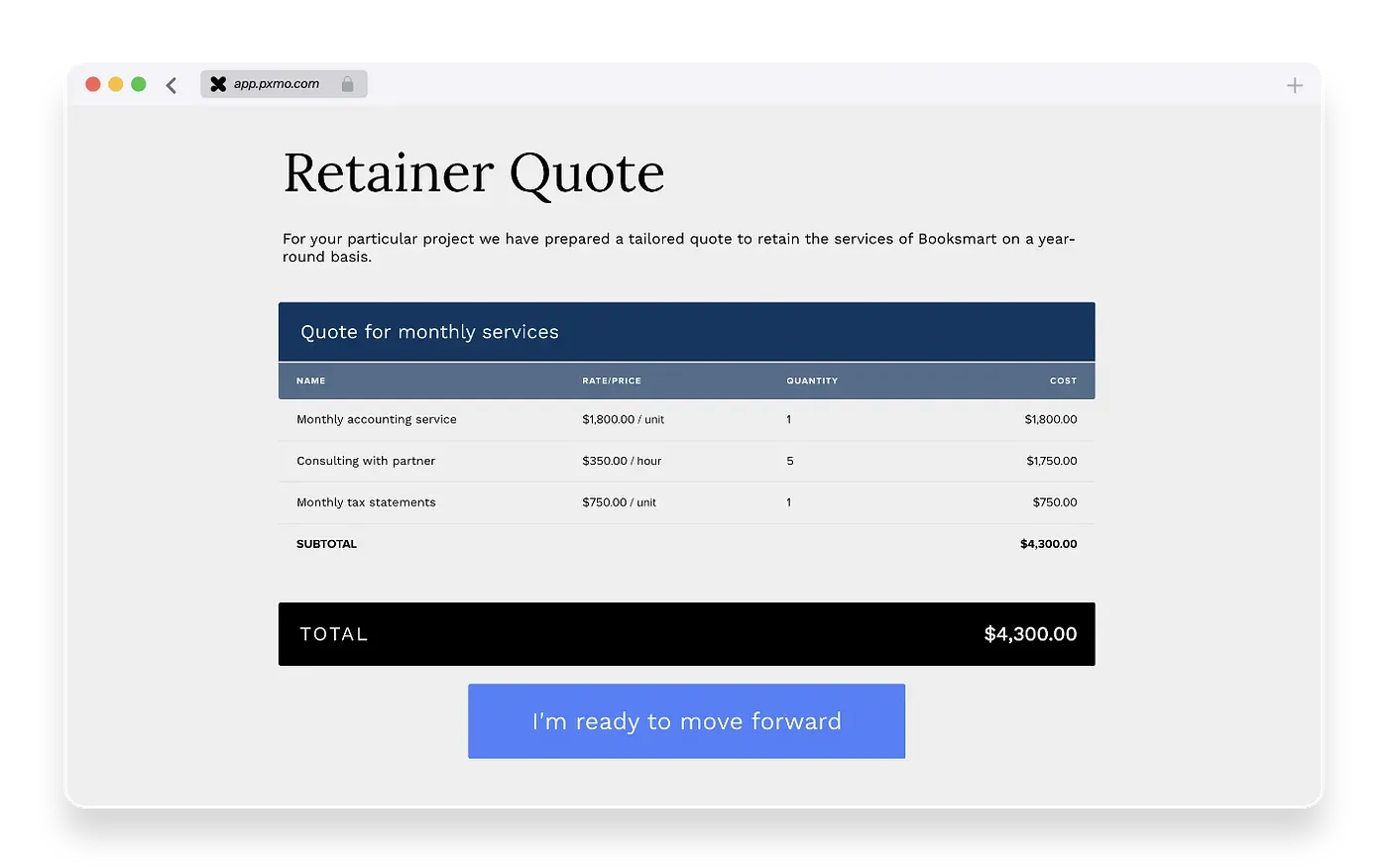
The pricing section is where you talk about the cost implications of working with you. Before sharing any costs, you should do your research to ensure that you aren’t underpricing or overpricing your products, as these can turn off potential clients. pxmo has an in-built quote and inventory feature that allows you to easily add quote and pricing tables for your products or services, broken down across the various deliverables. With pxmo, you can also create optional fee tables, which are perfect for upselling your products or services. Your clients will be able to choose the service they need and select additional options, depending on their needs and budgets. Insert image of pricing page
8. Conclusion
We’re getting to the tail end of the proposal, and you need to write a powerful conclusion that keeps your prospect thinking of you in a positive light. Since they’ve likely just finished reviewing your prices, it might help to restate the value you deliver and the problems you solve to remind them that you are an investment, not an expense. Summarise the entire proposal in this section, and remember to touch on your qualifications and why you are the best choice. The goal of this section is to leave prospects ready (and hopefully rearing) to work with you, so don’t forget to include your contact details. Make it as simple as possible to get in touch with you and request further information or clarify any confusing details. Insert image of conclusion page
9. Call-To-Action (CTA)
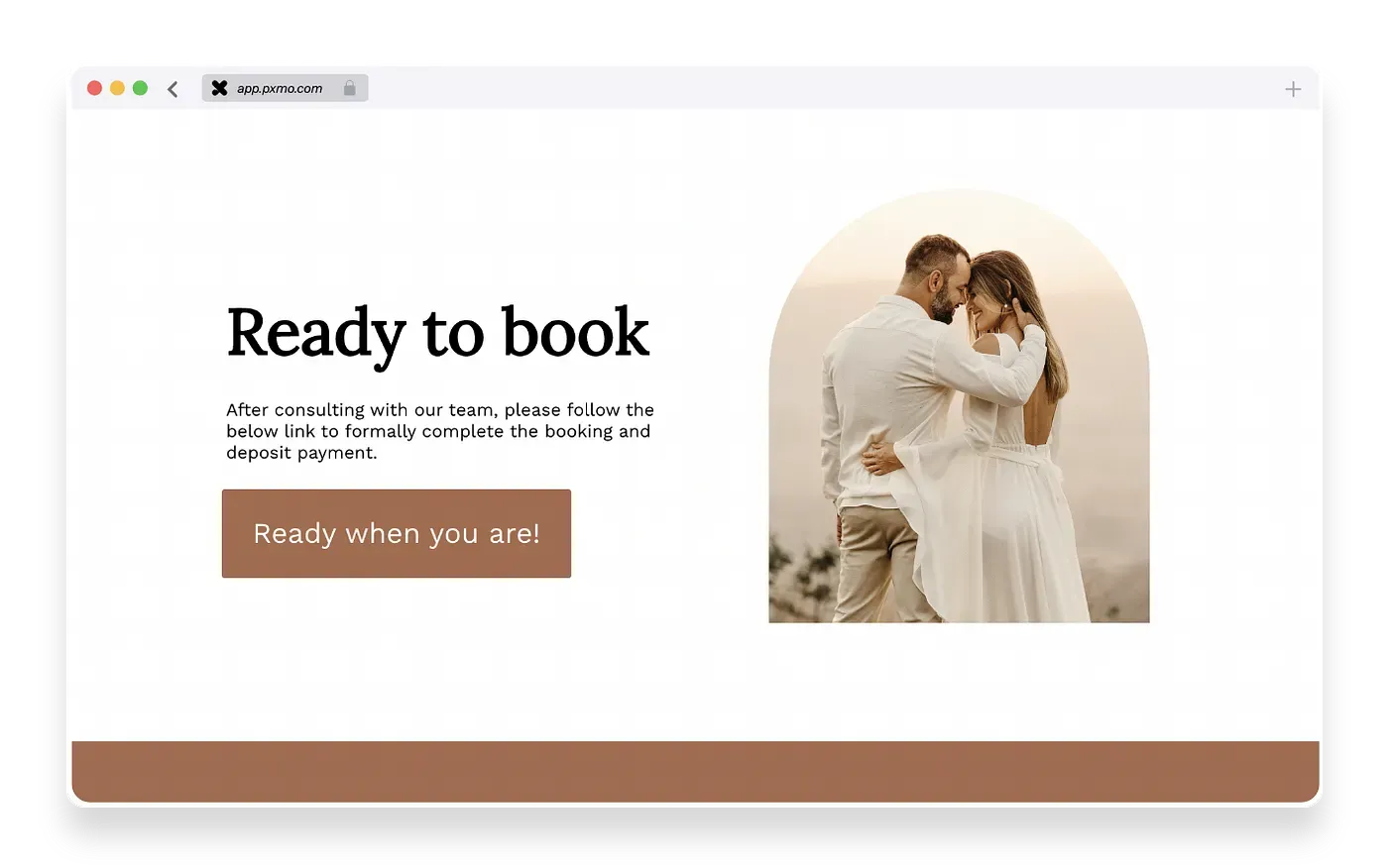
This section is especially critical if you are sending an unsolicited proposal. It’s easy to assume that a prospect knows what to do next after reading your proposal, but that’s the fastest way to have your proposal collect digital dust in their inbox. Include a direct CTA for the client to contact you and get more information. For example, if the proposal is sent online, you should add a link that leads them to send you an email, book a call, or chat with you live.
With pxmo, you can add 3 different types of CTA buttons to your proposal:
- Accept button: Allows prospects to accept the contents of your proposal and pay directly from the proposal, should this suit both parties.
- Callback button: Displays a form for prospects to fill in their contact information and request a callback. This button is especially helpful if the proposal is an unsolicited one.
- Custom button: These types of buttons are fully customisable, and can be linked to any website or web page of your choosing.
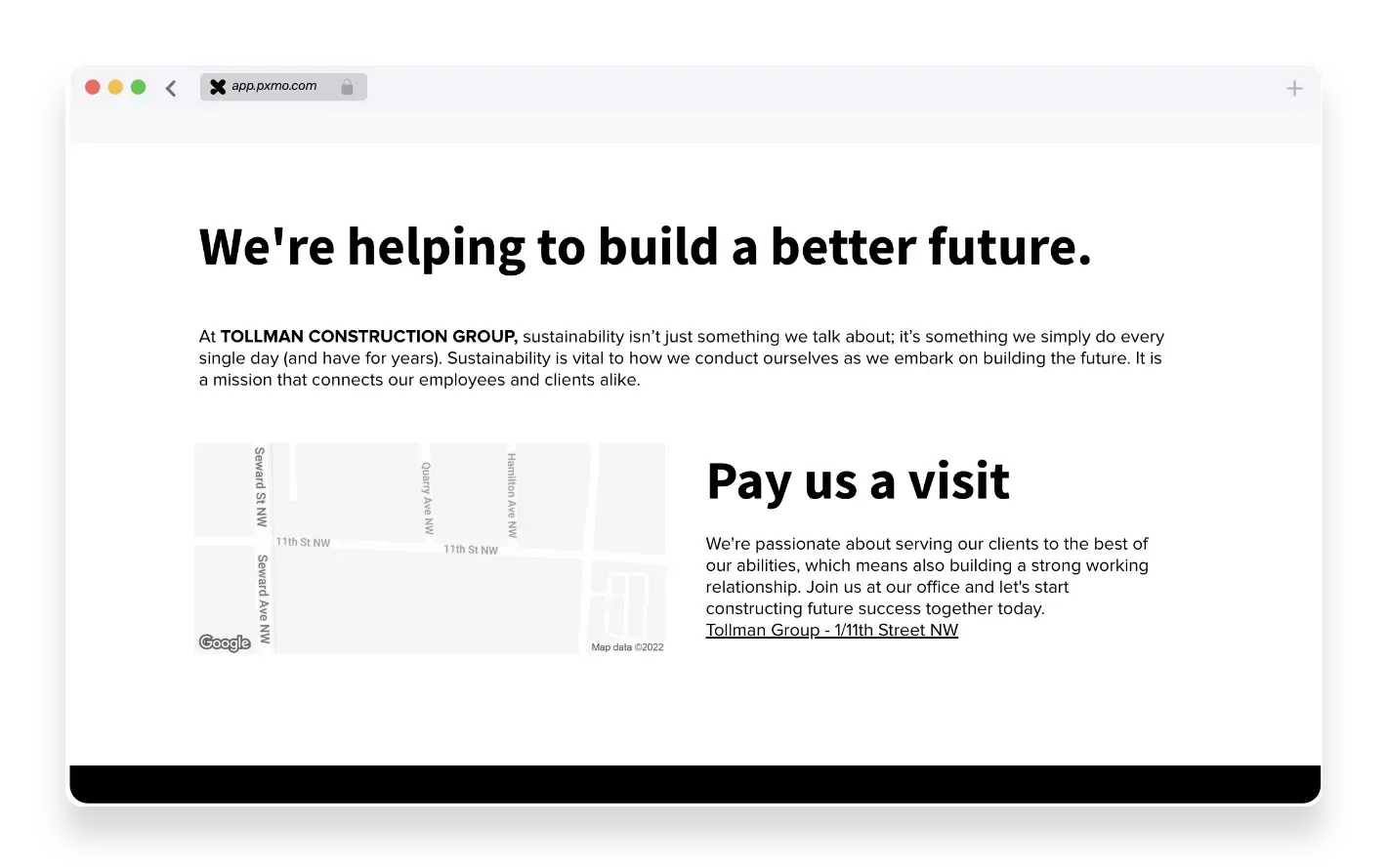
pxmo also integrates with Google Maps, so you can add a Contact/Visit Us section that shows your location on the map. This may suit some decision-makers better than an entirely digital agreement process, and can therefore act as a great secondary CTA.
10. Terms and Conditions
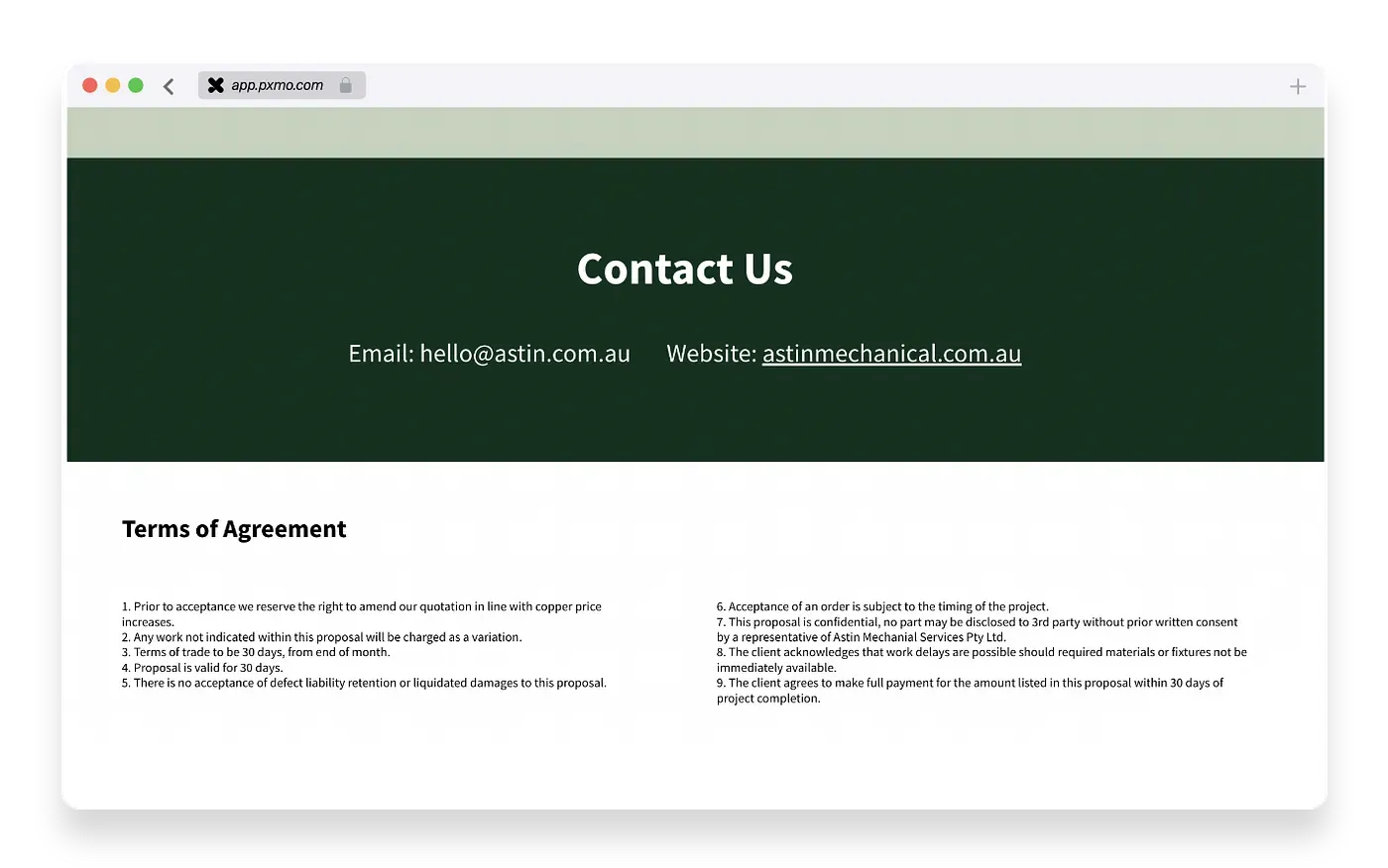
Finally, the terms and conditions section summarises exactly what you and the client will agree to if they choose to work with you. This is where you detail the proposed timeline of execution, payment schedules, and other important policies for the client to be aware of.
Supercharge Your Proposals with pxmo
By incorporating these 10 elements, your business proposals stand a better chance of convincing prospective clients to work with you. And with pxmo, building the perfect business proposal has never been easier. Sign up for free to unlock the power of pxmo in your proposals today!
pxmo is a digital proposal management suite that allows you to create high-quality online proposals in a flash! You don’t need to be an expert designer or copywriter to create stunning, visually-appealing proposals that look good and attract new clients. pxmo is completely digital and interactive, so your proposals are hosted online and fully mobile responsive. As a result, your clients can accept your proposals and make payments from anywhere. Should offline viewing or printing be required, pxmo proposals can also be downloaded as a PDF.
pxmo makes collaboration a breeze - you can invite teammates (or even clients) to work on a proposal in real-time, with every change synced in real-time. In addition, you can manage your proposal pipelines in one place and see how prospective clients view and react to your proposal in real-time. This allows you to review and refine your content based on what sells so that you can turn your proposal into a true selling machine
Last but not least, this powerful business proposal builder comes with distinctive proposal templates tailored to your industry, so you can get a major headstart in creating your proposals.
So, what are you waiting for? Sign up at pxmo.com today and start creating proposals that perform!